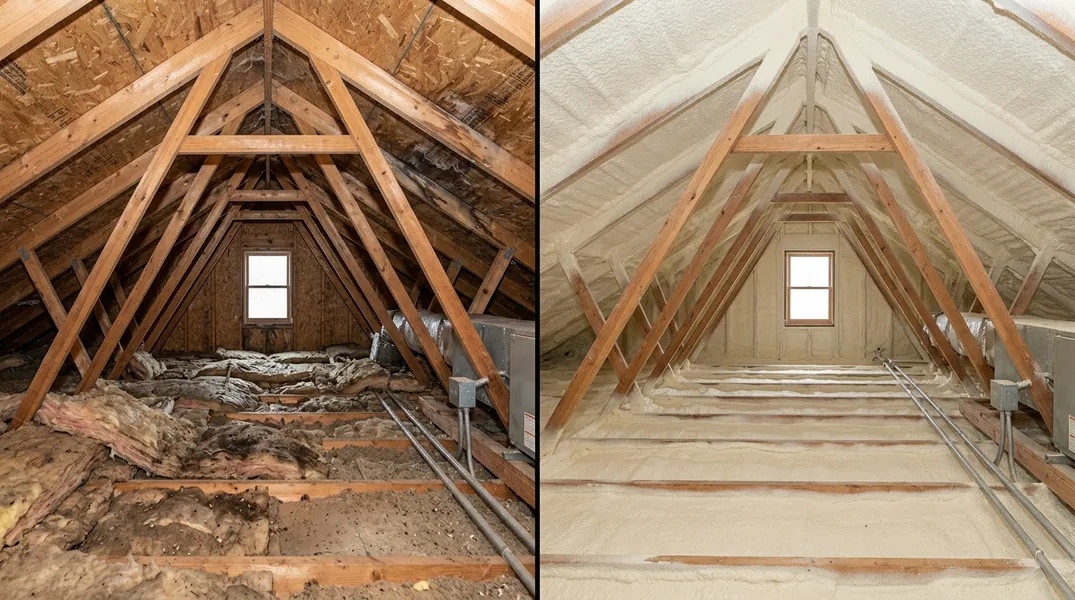
Is Spray Foam Insulation Worth It? The Honest Answer
When homeowners in St. Cloud start researching insulation options, spray foam often comes up as a premium solution. But the real question isn't whether it exists or what it costs, it's whether the investment makes sense for your specific situation. The answer depends on several factors unique to your home, your budget, and your long-term plans.
Attic Spray Foam Insulation offers genuine advantages that traditional fiberglass batts simply cannot match. It seals air leaks, prevents moisture infiltration, and creates a continuous thermal barrier. For homeowners dealing with drafty attics, energy bills that climb in winter, or moisture problems, spray foam can deliver measurable returns within a few years. However, it's not a one-size-fits-all solution, and understanding both the pros and cons will help you make an informed decision.
Spray Foam Insulation Pros and Cons: What You Need to Know
The advantages of spray foam are substantial. First, it achieves a higher R-value per inch than fiberglass, meaning you get better insulation in less space. Second, it expands to fill gaps, cracks, and irregular spaces that traditional insulation cannot reach. This air-sealing property is critical in cold climates like St. Cloud, where heating costs dominate household budgets. Third, spray foam resists moisture and can help prevent mold growth in damp attics. Fourth, it's a one-time installation that typically lasts the life of your home.
The drawbacks deserve equal attention. Spray foam is significantly more expensive than fiberglass insulation, often costing two to three times as much upfront. Installation requires trained professionals and specialized equipment, so you cannot DIY this project. Some homeowners report issues with installation quality, including incomplete coverage or improper application. Additionally, spray foam is not vapor-permeable, which means it must be installed correctly to avoid trapping moisture inside walls. Finally, there are legitimate questions about off-gassing and indoor air quality that deserve a thorough examination.
Is Spray Foam Insulation Safe? Understanding Off-Gassing and Health Concerns
Safety is the question we hear most often from homeowners considering spray foam. The concern centers on chemical off-gassing, volatile organic compounds (VOCs), and potential health effects. It's a valid concern, and it deserves a straightforward answer: properly installed spray foam is safe, but the installation process and the first few days afterward require caution.
During application, spray foam releases chemical fumes as the polyol and isocyanate components react and cure. This is why professional installers wear protective equipment and why your home should be vacated during and immediately after installation. Once fully cured, which typically takes 24 to 48 hours, the foam itself is inert and does not continue releasing harmful chemicals. The EPA and manufacturers have established safety standards for spray foam products, and reputable contractors follow these guidelines rigorously.
However, there are scenarios where problems can occur. Poor ventilation during curing, inadequate protective measures during installation, or low-quality products from unvetted suppliers can increase exposure to fumes. Homeowners with chemical sensitivities, asthma, or respiratory conditions should discuss their situation with their contractor before proceeding. If you have concerns about off-gassing, discuss them when you request your free estimate so the contractor can address your specific needs and recommend appropriate precautions.
Common Spray Foam Insulation Problems: What Can Go Wrong
While spray foam is effective when done right, installation mistakes can create problems. One common issue is improper application that leaves voids or thin spots, reducing the insulation's effectiveness and air-sealing capability. Another problem occurs when spray foam is applied in spaces without adequate ventilation, trapping moisture and eventually leading to rot or mold. Some homeowners have reported difficulty finding contractors willing to remove or repair spray foam, since removal is labor-intensive and expensive.
Expansion is another consideration. Spray foam expands as it cures, which is why it fills gaps so effectively. However, if applied in confined spaces or against certain materials, excessive expansion can crack drywall, warp wood framing, or damage electrical systems. This is why professional installation is non-negotiable. Contractors understand how much material to apply, how to account for expansion, and how to protect sensitive components.
Another reported issue involves compatibility with certain roof assemblies. In some cases, spray foam can trap heat and moisture in ways that damage roofing materials over time. This is particularly important to understand if you're considering Closed Cell Spray Foam Insulation, which is vapor-impermeable and requires careful design to prevent moisture accumulation. The takeaway: spray foam problems are usually preventable through proper design, professional installation, and contractor accountability.
Spray Foam Off-Gassing: Timeline and What to Expect
If you decide to move forward with spray foam, understanding the off-gassing timeline helps you prepare and manage the process safely. The strongest chemical odors occur during installation and for the first 24 to 48 hours afterward. During this period, your home should be unoccupied, windows should be opened as weather permits, and ventilation systems should be running. Some contractors recommend leaving your home for the first night after installation.
After 48 hours, the foam is substantially cured, and most chemical smell dissipates. However, some homeowners report detecting faint odors for up to a week, particularly in enclosed spaces like attics. This is normal and does not indicate a problem. If you notice strong chemical smells persisting beyond a week, contact your contractor immediately, as this could indicate incomplete curing or improper installation. Keeping your home well-ventilated during the first week and using exhaust fans in bathrooms and kitchens will help clear any remaining odors naturally.
For homeowners with sensitivities, consider scheduling installation during mild weather when you can open windows safely. Also discuss low-VOC or eco-friendly spray foam options with your contractor, though these may affect pricing and availability.
Attic Spray Foam Insulation Cost in St. Cloud: What to Budget
Cost is often the deciding factor for homeowners. Attic Spray Foam Insulation typically ranges from $1.50 to $3.50 per board foot, depending on whether you choose open-cell or closed-cell foam. For a typical 1,500-square-foot attic, you're looking at $3,000 to $8,000 or more. This is substantially higher than fiberglass batts, which might cost $1,000 to $2,000 for the same space.
However, comparing only upfront costs misses the bigger picture. Spray foam's superior R-value, air-sealing properties, and longevity mean lower heating and cooling costs for years to come. Many homeowners recover their investment within 5 to 10 years through energy savings, especially in cold climates where heating dominates utility bills. Additionally, improved comfort, better moisture control, and the elimination of future insulation replacement add non-monetary value.
To get an accurate quote for your home, contact St Cloud Spray Foam Insulation at (320) 433-8205 or request your free estimate today. We'll assess your attic, discuss your goals, and provide transparent pricing so you can make a confident decision.
Choosing Between Open-Cell and Closed-Cell Spray Foam
Open Cell Spray Foam Insulation has a lower density and R-value per inch (around R-3.6), making it more affordable. It's also vapor-permeable, which allows moisture to pass through, making it a good choice for certain applications. However, it's less effective at air sealing and offers less structural support. Closed Cell Spray Foam Insulation is denser, achieves higher R-values per inch (around R-6 to R-7), provides superior air sealing, and adds structural rigidity to framing. It's more expensive but offers better performance in cold climates and moisture-prone environments.
For attics in St. Cloud, closed-cell foam is often the better choice due to our harsh winters and the need for superior air sealing. However, your specific situation, existing ventilation, and budget will influence the recommendation. Your contractor should evaluate your attic and explain why one option is better suited to your home.
Looking for a professional spray foam insulation contractor in St. Cloud? St Cloud Spray Foam Insulation responds fast for all your spray foam insulation needs.
Get a Free Quote