Why Lake Cabin Owners Are Converting to Year-Round Living
The Horseshoe Chain of lakes near St. Cloud has long been a favorite destination for seasonal getaways. Families built cabins decades ago as summer retreats, but times have changed. Remote work, rising property values, and the desire for a permanent retreat from city life have prompted many cabin owners to ask a critical question: can we make this place livable year-round?
The answer is yes, but it requires serious attention to insulation and climate control. A cabin that works beautifully in July becomes a liability in January without proper thermal protection. The most overlooked area in cabin winterization is the crawl space, the often-neglected area beneath the cabin where pipes freeze, heat escapes, and moisture accumulates. Addressing this space is essential before your first winter as a full-time resident.
Understanding Crawl Space Insulation: The Foundation of Year-Round Comfort
Crawl space spray foam insulation is fundamentally different from traditional fiberglass batts or blown-in cellulose. In a crawl space, you face a unique combination of challenges: moisture from the ground, temperature swings, potential pest entry points, and the need to protect water lines from freezing. Standard insulation materials struggle with these conditions because they absorb moisture and degrade over time.
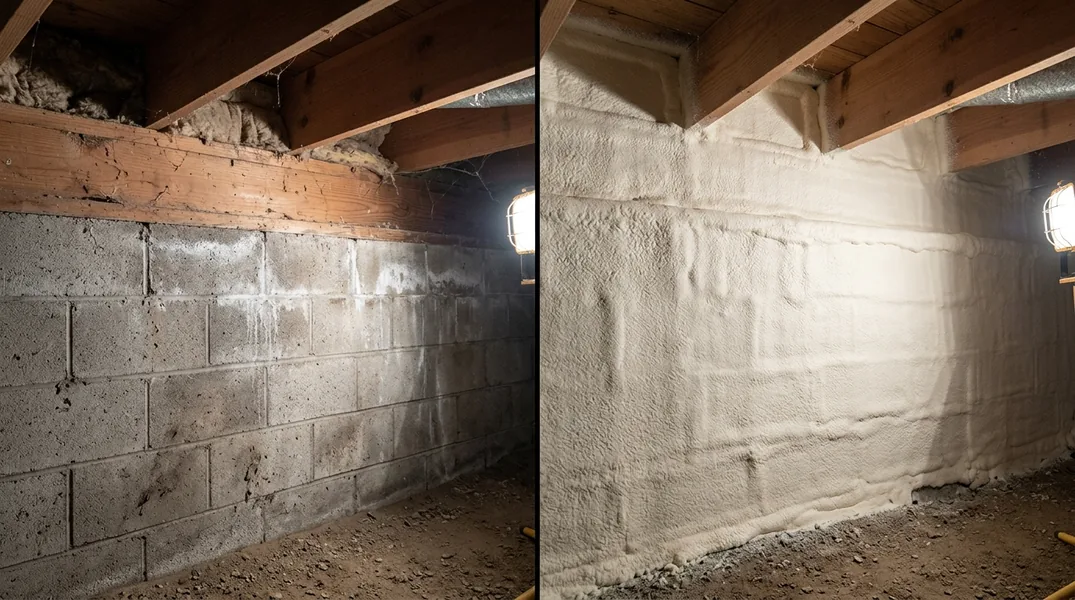
Closed cell spray foam creates an air-tight, moisture-resistant barrier that addresses all these issues simultaneously. When applied to crawl space walls and rim joists, it seals air leaks, resists moisture infiltration, and maintains its R-value for decades. For lake cabin owners converting to year-round use, this means your heating system won't work overtime, your utility bills won't spike, and your pipes won't freeze during Minnesota winters.
How Spray Foam Protects Crawl Spaces from Moisture and Cold
Minnesota winters are unforgiving, and lake properties face additional moisture challenges from groundwater and seasonal water table changes. A traditional vented crawl space allows cold air to circulate freely, creating frost on pipes and structural beams. Worse, that vented design allows moisture to enter during warmer months, promoting mold growth and wood rot that can compromise your cabin's structural integrity.
When you seal a crawl space with closed cell spray foam insulation, you create a conditioned space that stays warm and dry. The foam adheres directly to rim joists, band boards, and foundation walls, eliminating the air gaps where cold penetrates. The material itself is impermeable to water vapor, meaning ground moisture cannot pass through. This combination keeps your crawl space at a stable temperature, preventing pipe freezing and reducing the load on your heating system. For cabin owners in the St. Cloud area, this protection is not a luxury; it is essential infrastructure for winter survival.
Crawl Space Spray Foam Near Me: When to Call a Professional
Some homeowners attempt DIY insulation projects, but crawl space work is not a weekend project. The space is cramped, the application requires precision, and improper installation can leave thermal bridges that negate the entire investment. Professional spray foam contractors have the equipment, training, and experience to apply foam evenly, achieve proper coverage on rim joists and band boards, and ensure all air leaks are sealed.
St Cloud Spray Foam Insulation serves the St. Cloud region with crews experienced in lake cabin winterization and crawl space encapsulation. When you call (320) 433-8205 for a free estimate, our team will inspect your crawl space, assess moisture and ventilation issues, and recommend the right foam type and thickness for your property. This professional assessment ensures your cabin is properly protected before winter arrives.
Comparing Spray Foam to Other Crawl Space Insulation Options
Before committing to spray foam, many homeowners wonder how it compares to other insulation methods. Fiberglass batts are cheaper upfront but absorb moisture and settle over time, losing effectiveness. Blown-in cellulose offers better coverage but still absorbs water and requires a vapor barrier that often fails. Rigid foam boards are effective but leave gaps around pipes and irregular surfaces, creating thermal bridges. Closed cell spray foam outperforms all these options because it seals as it expands, conforming to every surface and eliminating gaps entirely.
The durability argument is equally compelling. Fiberglass and cellulose may need replacement in 15 to 20 years, especially in damp crawl spaces. Spray foam, when properly installed, remains effective for 30+ years without degradation. For a cabin you are converting to a permanent home, this longevity translates to peace of mind and lower long-term costs. While spray foam has a higher initial pricing point, the energy savings and durability make it the most cost-effective choice for serious winterization projects.
The Complete Winterization Picture: Crawl Space Plus Attic Insulation
Converting a lake cabin to year-round use requires a comprehensive approach. While crawl space insulation prevents heat loss from below and protects pipes, you cannot ignore the attic. Heat rises, and a poorly insulated attic allows warm air to escape in winter while letting solar heat penetrate in summer. Many cabin owners discover that upgrading their crawl space insulation reveals inadequate attic protection, creating an imbalance in their thermal envelope.
Attic spray foam insulation works in tandem with crawl space foam to create a fully sealed, thermally efficient home. Together, these two upgrades can reduce heating costs by 20 to 30 percent while eliminating cold spots and drafts. For cabin owners on the Horseshoe Chain or anywhere in the St. Cloud area preparing for year-round living, this integrated approach is the gold standard. St Cloud Spray Foam Insulation can evaluate both spaces and create a customized insulation plan that maximizes comfort and efficiency.
Getting Started: Your Path to a Winterized Cabin
The transition from seasonal cabin to year-round home is exciting but requires careful planning. Insulation is not glamorous, but it is the foundation of comfort, safety, and affordability. A crawl space that is properly sealed and insulated with spray foam will keep your family warm, protect your plumbing, and reduce your heating bills. This is the first step every cabin owner should take before moving in for the winter.
If you own a cabin on the Horseshoe Chain or elsewhere in the region and are ready to make the leap to year-round living, contact St Cloud Spray Foam Insulation today. Call (320) 433-8205 or visit our website to request a free estimate. Our team will assess your crawl space, explain your options, and provide a clear plan to winterize your property. Your future self, sitting by the fireplace in January, will thank you for making this investment now.
Looking for a professional spray foam insulation contractor in St. Cloud? St Cloud Spray Foam Insulation responds fast for all your spray foam insulation needs.
Get a Free Quote